Basilica · ModernismeMust-see
Sagrada Família
Construction began in 1882 and is still ongoing. The Nativity and Passion façades, with a central tower planned to reach 172.5m.
Online booking required
Founded as a Roman colony, rebuilt as a Gothic capital, redesigned by Cerdà in the 19th century, then reopened to the sea by the 1992 Olympic Games: eight neighbourhoods to understand how this city has changed its face without ever changing address.
Barcelona reads like an open-air history book. Each neighbourhood corresponds to a layer: the Roman and Gothic core, the opening onto the sea, the 19th-century bourgeois expansion, the Olympic revival.
The historic heart of Barcelona, from the Roman colony of Barcino to Santa Eulàlia Cathedral. Ciutat Vella.
Picasso, Santa Maria del Mar, Gothic palaces on Carrer Montcada.
Fishermen's lanes and a fine sandy beach, born in 1753.
The Sagrada Família, Passeig de Gràcia, Casa Batlló and La Pedrera.
A village annexed in 1897 that has kept its Fiesta Mayor and its own pace.
From the 'Barrio Chino' to the MACBA and the CCCB.
The 'Broadway' of Paral·lel avenue, at the foot of Montjuïc.
From the 'Catalan Manchester' to the 22@ technology district.
| Neighbourhood | Price / night | Median length of stay | Dominant profile |
|---|---|---|---|
| Barri Gòtic | £143 (avg) | 4 nights | Couples |
| El Born | £152 (avg) | 5 nights | Couples |
| La Barceloneta | £177 (avg) | 6 nights | Families |
| Eixample | £154 (avg) | 5 nights | Couples |
| Gràcia | £97 (avg) | 6 nights | Solo travellers |
| El Raval | £144 (avg) | 4 nights | Groups of friends |
| Poble Sec | £138 (avg) | 5 nights | Groups of friends |
| Poblenou | £132 (avg) | 6 nights | Families |
Source: Internal Stayforlong data. Analysis based on aggregated bookings over the trailing 12 months. Provided for informational purposes. GBP prices are converted from EUR at an approximate rate (27 Aug 2026) — to be reconfirmed before publication.
Source: Internal Stayforlong data. Analysis based on aggregated bookings over the trailing 12 months. Provided for informational purposes. GBP prices are converted from EUR at an approximate rate (27 Aug 2026) — to be reconfirmed before publication.
Six sites that sum up Barcelona's great layers, from the merchant Middle Ages to Modernisme.
Construction began in 1882 and is still ongoing. The Nativity and Passion façades, with a central tower planned to reach 172.5m.
Five Gothic palaces on Carrer Montcada. Picasso himself wanted the museum to open in Barcelona rather than Málaga.
A failed Gaudí real-estate project turned public park in 1926, listed as a World Heritage Site in 1984. The monumental zone charges admission; the woodland zone is free.
A bright, minimalist building by Richard Meier (1987-1995), at the heart of the reconverted Raval.
One of Gaudí's first major works, built for the industrialist Eusebi Güell.
Housed in the Palau de Mar, at the entrance to La Barceloneta, with a terrace overlooking the port.
Markets, beaches, cabarets and neighbourhood festivals — the other side of the city, less about museums.
A 19th-century covered market on La Rambla. Move away from the entrances for better prices.
La Barceloneta for the atmosphere, Bogatell (Poblenou) for fewer crowds.
Departs from Paral·lel station, in the heart of Poble Sec.
A century-old cabaret and an iconic concert venue on Paral·lel avenue.
A wide promenade lined with terraces, once the site of medieval jousting tournaments.
Mid-August: streets decorated by residents, a major fixture on the festival calendar.
An antiques market in the Barri Gòtic, every Thursday.
Since 1996, Poblenou's artist studios have opened their doors to the public.
Between tapas, markets and maritime tradition: a few pointers before choosing where to eat.
A direct legacy of La Barceloneta's fishermen, with a daily catch auction at the neighbourhood market.
Maritime traditionVermouth on tap, a Sunday-morning ritual on the terraces of Poble Sec (Carrer de Blai).
AperitifFrom the Barri Gòtic to El Born, a dense but uneven offering along the most touristy routes.
Must-tryOrxateria El Tio Che, a century-old establishment in Poblenou, homemade horchata and ice cream.
Historic ice-cream parlourA historic covered market on La Rambla, still used by locals and restaurateurs.
Fresh produceMoroccan and Asian cuisines sit alongside traditional tapas, often just metres apart.
El RavalFreixenet and Codorníu, the region's main producers — the Codorníu cellars are a jewel of Catalan Modernisme.
PenedèsSweet grilled onions, served in season on Catalan tables around Barcelona.
Catalan specialityDepending on your length of stay and temperament, here are three geographically coherent neighbourhood combinations.
From the Roman colony of Barcino to the 22@ technology district, one and the same address has been through four major urban reinventions.
Founded around 10 BC under the name of Barcino, a colony of around 10,000m² around Mont Tàber, surrounded by a four-gated wall reinforced in the 3rd century by a second rampart with 76 towers.
The first municipal self-government regime was obtained in 1249. Catalan Gothic flourished in the 13th-14th centuries (Santa Maria del Mar, the Llotja de Mar, the Drassanes Reials).
Defeat in 1714 against Bourbon troops, the abolition of the Generalitat and the Consell de Cent, the levelling of the Ribera district to build the Ciutadella. Later manufacturing growth in Sant Pere and El Raval.
After the walls were demolished, the Cerdà Plan (1860) laid out the city's expansion in a grid. Eight municipalities on the Barcelona plain were annexed between the late 19th and early 20th centuries, including Gràcia and Sarrià.
The 1888 Universal Exposition, the rise of Catalan Modernisme (Gaudí, Domènech i Montaner, Puig i Cadafalch), the 1929 International Exposition at Montjuïc.
The 1992 Olympics, the city's opening onto the sea (Vila Olímpica, Port Olímpic in Poblenou), the 2004 Universal Forum of Cultures, the 22@ technology district from 2005 onwards.
Transport, beaches, bookings: short pointers for the practical questions.
Metro, bus, the Montjuïc funicular from Paral·lel, the port cable car from La Barceloneta.
El Prat Airport, 16km to the south, connected to more than 200 international destinations. Aerobús (~35 min) or RENFE R2 (~20 min) to the centre.
The Barcelona Convention Bureau has been active since 1983; the city ranks 3rd worldwide in the ICCA congress rankings, behind Lisbon and Paris.
Barri Gòtic or Eixample for centrality, Barceloneta for the beach, Gràcia for a local vibe.
Online booking is required — there's no more on-site ticket office. Slots sell out in high season.
May-June and September-October for mild weather and moderate crowds, June to September for the beach.
Barceloneta for atmosphere and centrality, Bogatell (Poblenou) for fewer crowds.
Watch out for pickpockets in the most touristy areas (Barri Gòtic, the Ramblas) and on the metro, as in any big city.
Average price £162/night, long-stay discount from 5 nights.
Stay next level, Stayforlong.
Three choices that say more than your travel dates. Answer and discover which neighbourhood matches you, with the reasoning behind it.
Traveller quiz
Choose a dish
Choose a vibe
Choose an architectural style
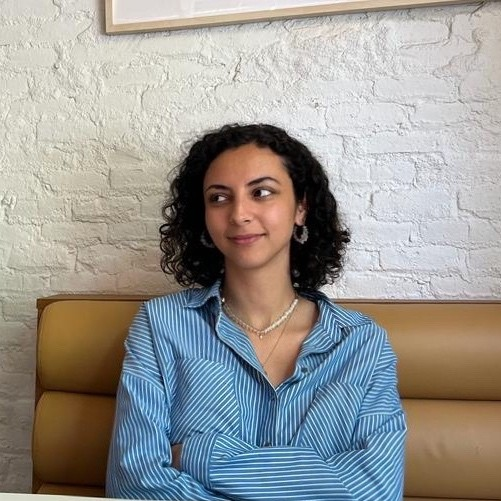
About the author
Brand Content Manager
Travel has always been my passion. After living in Japan — an experience that changed how I see the world — I've kept a strong bond with Spain, my home country. The queen of insider tips, I share my perspective and advice on my favourite regions, with the honesty of someone who really knows the country. My goal: to give you authentic advice, straight up.
Full transparency: I used AI as an assistant to translate this page and save time. Don't worry though — the content has been reviewed and verified.